Skip to content

The ART WORLD in decadence

The art world in decadence Boys will always be boys
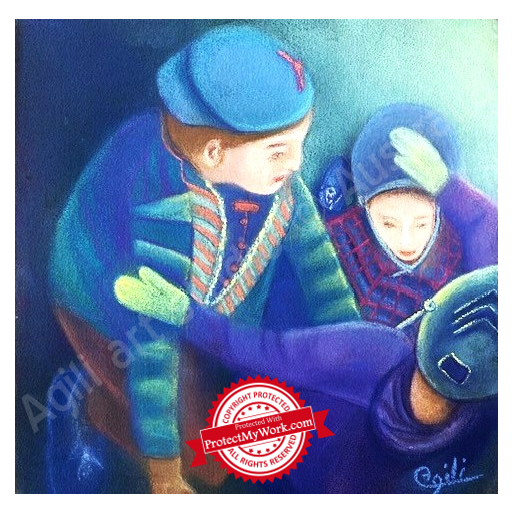
In the autumn light of 2025, the gallery doors didn’t slam shut all at once. They dimmed—quietly, politely—like chandeliers being lowered at the end of a long evening. One by one, across cities that once pulsed with openings and afterparties, sixty galleries closed within a year. Not with scandal or spectacle, but with resignation.
At first, the explanations sounded familiar. A gallerist in Berlin cited rising rent. Another in New York mentioned shipping costs that had doubled since the pandemic years. In London, a mid-tier space posted a farewell note about “changing collector habits.” Each message was slightly different, but together they formed a chorus: something fundamental had shifted.
Only a few years earlier, the market had been buoyant. During the pandemic, collectors—confined, restless, flush with liquidity—turned to art. Screens replaced white walls, but sales surged. Galleries adapted quickly: PDFs instead of previews, Instagram instead of openings. It felt, briefly, like a democratization. Geography blurred. Access widened.
But that momentum didn’t hold.
By late 2024, the mood had changed. The speculative edge dulled. Collectors grew cautious, then selective. The younger buyers who once chased emerging artists began asking harder questions: about value, longevity, reputation. The older collectors slowed too, not out of disinterest, but calculation. Art was no longer an impulsive click—it required conviction again.
Meanwhile, the costs never retreated.
To run a gallery had always been a balancing act, but now the rope was tighter. Rent climbed steadily, especially in the very neighbourhoods where galleries needed visibility. Shipping—once a logistical detail—became a major line item. Insurance, staffing, installation: all heavier, all less forgiving.
And then there were the art fairs.
For years, fairs had been both opportunity and obligation. A successful booth could define a season. But the price of entry—six figures in some cases—turned participation into a gamble. You showed up because you had to, not because it made sense. For smaller galleries, one bad fair could unravel a year.
So, when closures began, they weren’t sudden failures. They were decisions delayed too long.
In Paris, a respected mid-tier gallery closed after fifteen years. Its artists were known; its program was not weak. But the margins had thinned to the point where passion alone could not sustain it. “We did everything right,” the owner said, “except survive the math.”
Even the blue-chip spaces felt the pressure, though less visibly. They didn’t close, but they consolidated. Fewer risks. More predictable artists. Bigger names, safer bets. At the top, the system tightened rather than broke.
What disappeared instead was the middle—the experimental, the emerging, the spaces that took chances before the market approved of them.
And yet, in the gaps left behind, something else began to move.
Artists, no longer anchored to traditional gallery structures, started building direct relationships with collectors. Studios became viewing rooms. Online platforms matured, not as substitutes, but as ecosystems of their own. Curators organized pop-up exhibitions in borrowed spaces—short-lived, but sharp. Artist-run initiatives resurfaced, less concerned with sales, more with presence.
The gallery, as a fixed and permanent place, began to feel less inevitable.
It wasn’t the end of the art world. It was a reconfiguration.
What looked, from a distance, like decline was in fact a redistribution of weight. The old model—expensive, centralized, dependent on a steady flow of sales—had reached its limit. Economics had exposed its fragility. But art itself had not retreated. It had simply slipped through the cracks, finding new paths, new formats, new audiences.
By early 2026, the silence left by those closed spaces was no longer empty. It was different.
Quieter. Less polished. But alive in ways that didn’t rely on leases or fair schedules.
In the end, it wasn’t art that failed. It was a structure that could no longer carry it the same way.

The ongoing Iran war has not so much broken the art market as it has intensified the fragility that was already defining it after the wave of gallery closures in 2025, acting less as a root cause and more as an accelerant to an industry already under strain from rising costs, slowing sales, and structural inefficiencies. Its most visible damage has been regional, with the Middle Eastern art ecosystem facing disruptions ranging from the temporary closure of museums and galleries to the relocation or safeguarding of cultural assets, alongside uncertainty surrounding major art hubs like Dubai and Doha that had previously been among the fastest-growing centres of global collecting and exhibition. Yet the deeper impact is economic rather than cultural, as the war has contributed to broader macroeconomic pressures—rising oil prices, inflationary spikes, disrupted logistics, and heightened recession risk—that directly affect the art trade’s most vulnerable pressure points, including shipping costs, international mobility of works, and the already precarious financial models of mid-tier galleries. These pressures do not introduce new weaknesses but rather compound existing ones, making it harder for smaller and mid-sized players to sustain operations in an environment where margins were already thin. At the same time, demand has shifted in ways that further expose this imbalance, with luxury spending softening in affected regions and tourism—an often-underestimated driver of gallery foot traffic and art fair success—declining, thereby reducing the casual and opportunistic buying that supports emerging artists and speculative segments of the market. However, it would be misleading to interpret this as a disappearance of wealth or interest in art altogether, because capital in times of geopolitical instability rarely vanishes; instead, it relocates, often flowing toward perceived safe havens such as London, New York, or other stable financial centres, and into assets that are seen as reliable stores of value. This dynamic is clearly visible in the behaviour of high-net-worth collectors, who continue to participate actively in the market but with a markedly different strategy than during the speculative surge of the early 2020s, favouring blue-chip works, museum-quality pieces, and artists with established track records over emerging or trend-driven names. In this sense, art remains a viable and even attractive investment, but its role has shifted from a space of rapid upside and discovery to one of capital preservation and long-term positioning, aligning more closely with traditional asset classes like real estate or gold. The result is a market that is increasingly polarized, often described as K-shaped, in which the top tier not only remains stable but in some cases strengthens due to concentrated demand and limited supply, while the middle tier—comprising many of the galleries that closed in the past year—continues to contract under the weight of reduced liquidity and heightened risk. Meanwhile, at the lower end and outside traditional structures, new forms of activity are emerging, including artist-led initiatives, direct-to-collector relationships, and more flexible exhibition models that operate without the overhead of permanent spaces, suggesting that while the conventional gallery system is under pressure, the broader ecosystem of art production and exchange is adapting rather than disappearing. Ultimately, the Iran war’s most significant effect on the art market is not destruction but acceleration: it is speeding up a transition toward a more selective, financially driven, and uneven landscape in which fewer participants wield greater influence, risk tolerance is lower, and success depends increasingly on reputation, resilience, and the ability to operate within a shifting global framework.
Categories: Art

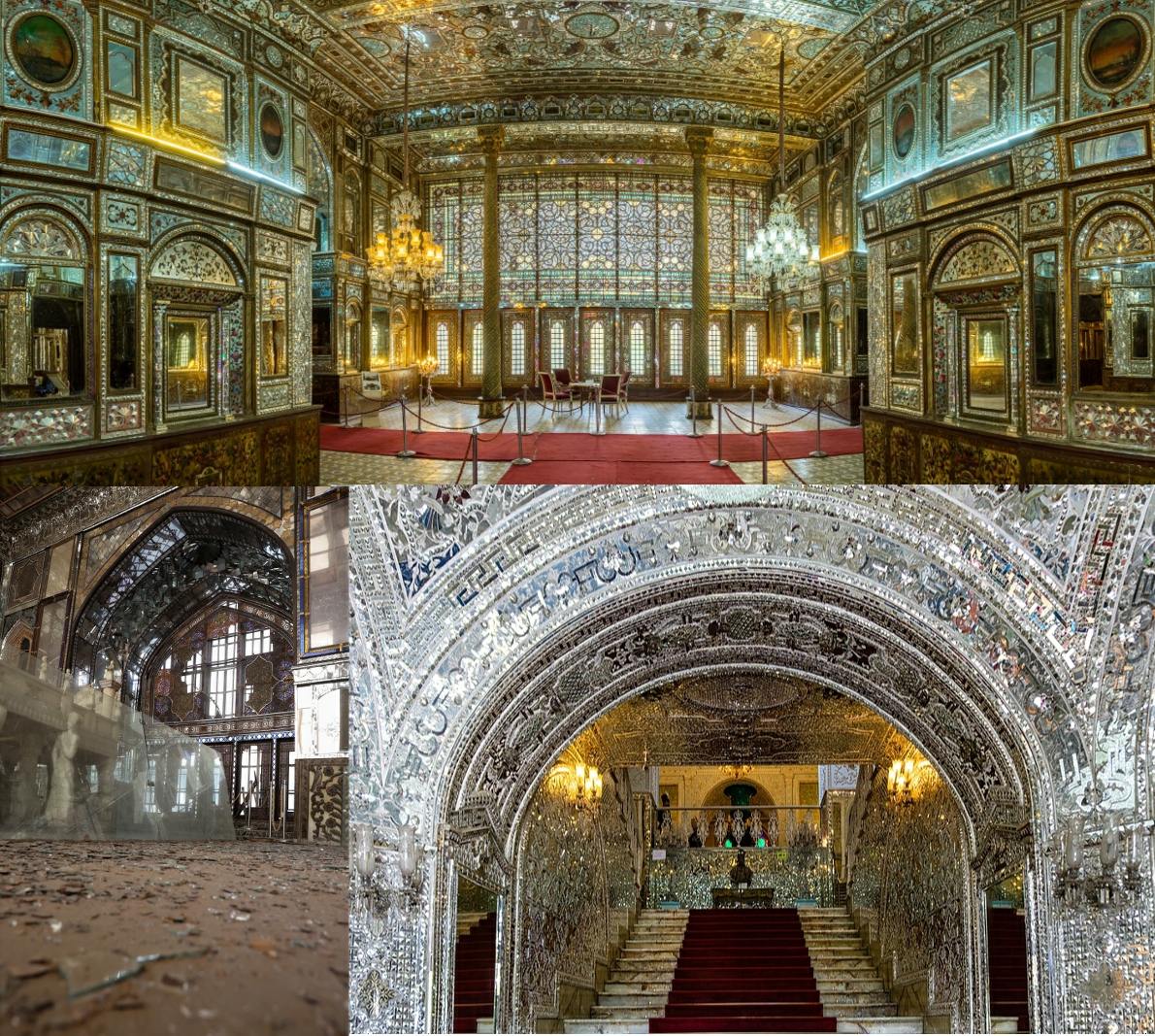
Golestan Palace, a landmark of Iran's cultural identity, damaged

Golestan Palave Iran
As tensions continue to escalate across the Middle East, one of Iran’s most cherished cultural landmarks has been caught in the crossfire.
The Golestan Palace — often called the “Rose Palace” — was damaged during recent airstrikes carried out by the United States and Israel, according to Iranian officials. The complex sits in the historic centre of Tehran and has long symbolised the country’s royal heritage.
The name Golestan translates to “Palace of Flowers.” It once served as the seat of power for the Qajar Dynasty, with much of the complex taking its current form in the 19th century. Eight principal buildings surround a landscaped garden, combining intricate Persian craftsmanship with elements of European neoclassical design.
In 2013, UNESCO added the palace to its World Heritage List, describing it as a defining architectural achievement of the Qajar period. Today it remains an important reference point for Iranian artists and architects — a place where art, ceremony and history converge.
On March 3, the Iranian government shared images and videos on social media showing damage across the complex. Footage circulated by Iranian officials and regional broadcaster Al Jazeera showed shattered windows, splintered wooden doors and fragments of the palace’s distinctive mirrorwork scattered across interior halls.
In a statement issued the same day, UNESCO said the site had been affected on March 2 by debris and shockwaves from nearby airstrikes. The organisation also voiced concern about the protection of cultural heritage as violence in the region intensifies.
For many Iranians, the destruction represents far more than physical damage. The Golestan Palace is not only a relic of royal history but a living record of artistic tradition — one that now carries the visible scars of a widening conflict.
Categories: Art

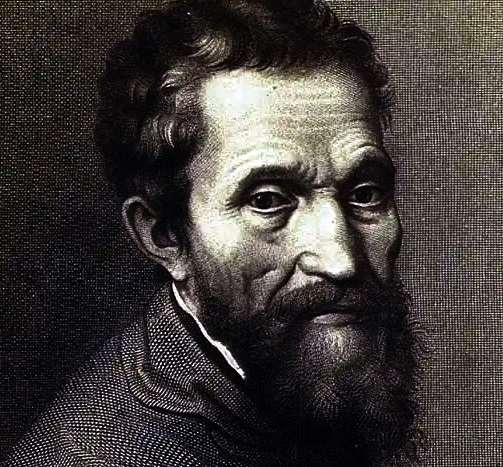
Twenty new works by Michelangelo Buonarroti have been attributed

Michelangelo
Twenty previously little-known or uncertainly attributed works have now been connected to Michelangelo Buonarroti.
According to Il Messaggero, the discovery stems from the research of independent Roman scholar Valentina Salerno. In her study Michelangelo Gli ultimi giorni (“Michelangelo: The Last Days”), she reconstructs the final years of Buonarroti’s life by examining dozens of documents preserved in Italian and international archives. Her findings challenge the long-held belief that the artist destroyed the hundreds of sketches, drawings, sculptures, and design projects kept in his Roman residence.
Instead, Salerno argues that Michelangelo entrusted his pupils and close associates with safeguarding his works in a hidden location. “One of the documents I uncovered describes a room where valuables were concealed,” she told the Roman daily. “It held material so precious that it required a system of multiple keys to gain access.” Yet the room, she noted, “has stood empty for more than 400 years.” This revelation has effectively launched a search for the master’s missing works—pieces that may now be more readily attributed to him.
Salerno’s research received support from the Canons Regular of the Lateran of the Blessed Sacrament and Professor Michele Rak, and was later taken up by Cardinal Mauro Gambetti, Archpriest of St. Peter's Basilica. He established a scientific committee made up of leading experts from major international museums, which continued its work even during the Conclave.
Meanwhile, at a February 5 auction at Christie's in London, a sketch of the foot of the Libyan Sibyl was sold after the auction house’s specialists followed the same attribution path outlined by Salerno—who said she “felt a surge of joy” upon hearing the news.
Categories: Art

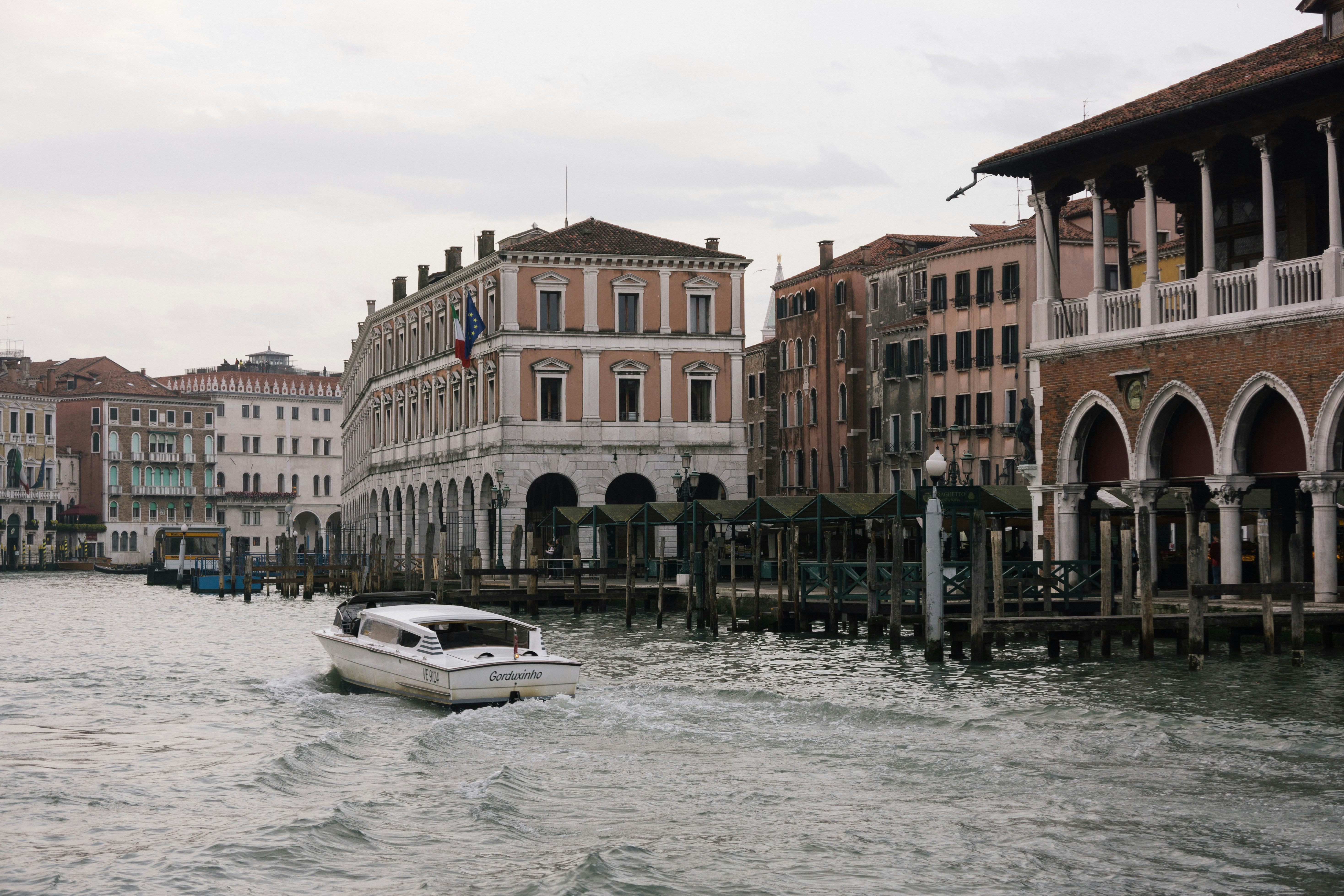
Venice Biennale 2026 sparks call for boycott
Why? Art is becoming so political!


Luciano Paolini editor of Mainly Music, art and cultures
Photo by Daniel Robert on Unsplash

Has anyone ever seen art declare war on anyone or anything?
Yes of course.
Artists in general are losing the battle of the right to freedom of expression.
Political parties involved in funding art events often channel their support toward preferred allies, aiming to secure voter approval rather than genuinely promoting cultural development.
Israel is renovating its Pavilion whilst there is an Uproar as South Africa Cancels Artist Over Artwork Referencing Gaza

Art has declared war again and again, sometimes loudly, sometimes obliquely. What’s changed is not whether art fights, but how power responds and how visible the battlefield is.
Art declaring war — historically.
Artists have openly positioned their work against people, systems, and ideas:
• Dada (1916–1920s) declared war on war itself, nationalism, reason, and bourgeois culture after WWI. Their chaos was intentional sabotage.
• Futurists controversially declared war on the past, museums, and tradition—an explicit manifesto-as-weapon.
• Picasso’s Guernica is a direct indictment of fascism and state violence. It doesn’t name Franco, but everyone knew.
• Situationists (1950s–60s) declared war on consumer capitalism and the “society of the spectacle,” influencing May ’68.
• Punk declared war on authority, polish, and complacency.
• Feminist, Black, queer, and decolonial art movements have declared war on erasure itself.
So yes—art has not only declared war, but it has also often done so before politics had the language to catch up.
What’s different now.
Artists are “losing the battle” in a sense—but the fight has shifted terrain.
Today, repression is often:
• Economic (defunding, precarity, algorithmic invisibility)
• Legal (vague morality laws, “national security,” copyright weaponized)
• Social (pile-Ons, bad-faith outrage, deplatforming)
• Algorithmic (shadow bans, engagement-based silencing)
Unlike past eras, censorship no longer needs to ban art outright. It can simply bury it, starve it, or exhaust the artist.
The paradox of freedom of expression now
We live in a time of maximum speech and minimum tolerance.
• Everyone can speak, but few can be heard.
• Expression is allowed, but consequences are privatized and amplified.
• Art is welcome as long as it is harmless, aesthetic, or profitable.
In that sense, art still declares war—but often without banners, manifestos, or a clear enemy. The opposition is diffuse: platforms, markets, states, mobs, attention economies.
Is art losing?
Not entirely—but it’s under pressure to:
• Entertain rather than disrupt.
• Brand rather than resist
• Signal rather than transform.
Yet history suggests something important:
Art has always looked weakest right before it reshapes the language of resistance.
The most dangerous art is rarely recognized as such in its own time.
If you’re willing to share, I’m curious:
Do you feel this loss of freedom most as an artist, a viewer, or both?
Your opinion counts.

Resurgence of realism and representational art

There is a notable resurgence of realism and representational art in the contemporary art world. This is less of a complete cycle back to traditional realism and more a vibrant reinvention of the style, blending classic techniques with modern themes and sensibilities.
Here are key aspects of this trend:
• Renewed Cultural Hunger: In an age dominated by digital experiences and AI-generated art, there's a growing desire for the tangible, the authentic, and the human touch in art. Realist art provides a connection to the world as we perceive it, which audiences and collectors find increasingly appealing.
• Blending of Old and New: Contemporary realism isn't just about mimicking reality with precision (like hyperrealism, a related but distinct style); it is about using the foundation of traditional skills to explore modern issues, tell complex stories, and capture the essence of current experiences. Artists are using both traditional materials like oil paint and modern tools, including digital technology, to achieve this.
• Emphasis on Technical Skill: After periods where conceptual art often took precedence, there is a visible return to appreciating high levels of technical achievement and craftsmanship. Art institutions and ateliers, like the Florence Academy of Art, have revived classical drawing and painting techniques, providing a strong foundation for a new generation of realist painters.
• Diverse Styles and Subject Matter: The contemporary realism movement is plural, encompassing various styles from expressive realism to hyperrealism. Artists are using these approaches to address diverse subjects, including identity, technology, and social issues, making the art both visually engaging and thought-provoking.
• Market Recognition: The art market has acknowledged this shift, with realist paintings achieving high prices at auctions and gaining increased coverage in art magazines and exhibitions at prominent museums globally.

The current landscape allows for an "anything goes" culture, with different art communities for realism, abstraction, and conceptual art coexisting. However, the growing visibility and popularity of contemporary realism indicate a significant, evolving trend.

Louvre Heist Leaves France red faced in front of the artistic world.

The fact that the break-in occurred at the Louvre Palace, a symbol of France’s cultural might has French officials questioning not just the Louvre’s vulnerability, but that of cultural sites across its country. Following years of security reductions and vulnerability reports, the French government is now embarrassed before the art community.
Money is the root cause of all evil.
Museum staff are placing the blame on years of staffing cuts that have left the Louvre with tough choices over where to position a limited number of security guards and surveillance cameras. They guard more than 700,000 square feet of exhibition space that includes masterpieces ranging from the Mona Lisa to ancient statues of Egyptian pharaohs.
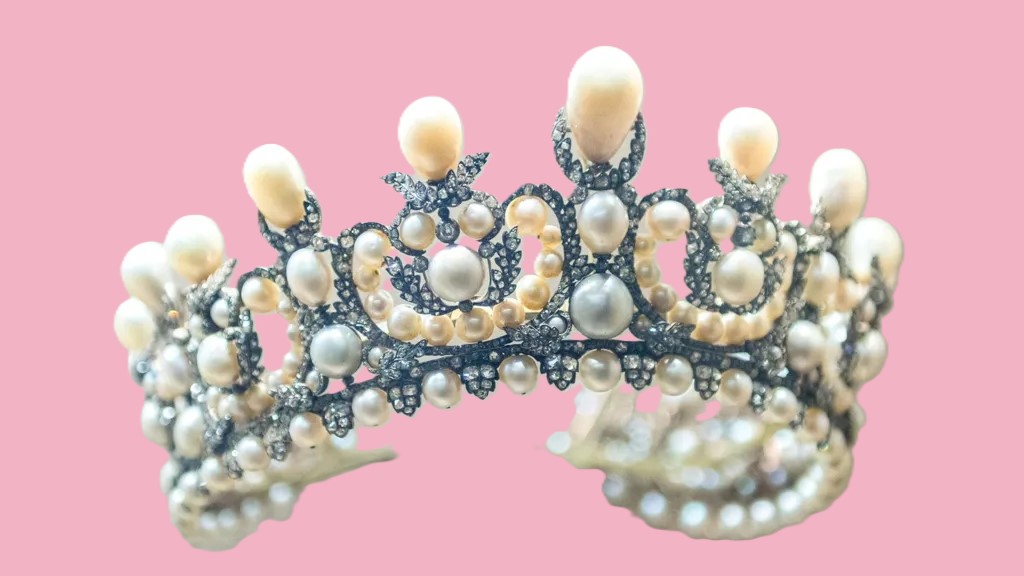
The crime wasn’t without errors. The criminals failed to set fire to their truck, prosecutors said; they also dropped the crown of Empress Eugénie, with 1,400 diamonds as they sped away. It was found damaged.
No one was injured. Eight pieces in total were stolen, including an emerald earring and an emerald necklace that belonged to Empress Marie-Louise as well as three jewels that belonged to queens Marie-Amélie and Hortense.
Stolen Jewels included:
• A tiara and brooch belonging to Empress Eugénie, wife of Napoleon III.
• An emerald necklace and a pair of emerald earrings from Empress Marie Louise.
• A tiara, necklace and single earring from the sapphire set that belonged to Queen Marie-Amelie and Queen Hortense.
Stolen Crown Jewels
Categories: Art

WITNESS TO A COMPLEX HISTORY - HERITAGE IN WAR - GAZA

Cristian Leporati

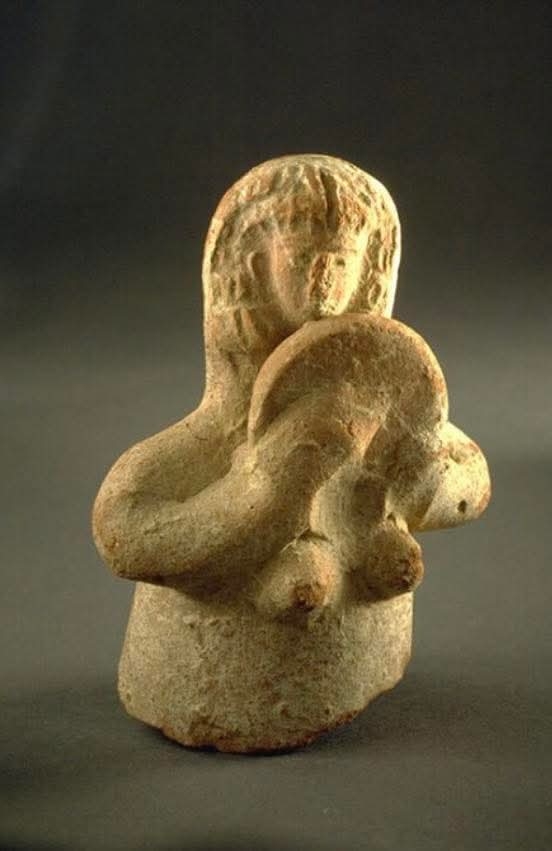
Gaza is home to a wealth of archaeological sites from all eras that are now in peril. The IMA is therefore offering an exceptional collection in more ways than one, made up of highly valuable pieces that the vagaries of history have saved from disaster and which reveal the depth of its history, a priceless treasure whose complexity is reflected in this exhibition.
Since 2007, the Geneva Museum of Art and History (MAH) has become the museum-refuge for an archaeological collection of nearly 529 works belonging to the Palestinian National Authority and which have never been able to return to Gaza: these amphorae, statuettes, funerary steles, oil lamps, figurines, mosaics, etc., dating from the Bronze Age to the Ottoman era, form a collection that has become a reference in view of the recent destruction.
With the help of the MAH and the support of the Palestinian National Authority, the IMA is exhibiting a selection of 130 masterpieces from this collection, from the Franco-Palestinian excavations begun in 1995, including the spectacular mosaic of Abu Baraqeh, and from the private collection of Jawdat Khoudery, donated in 2018 to the Palestinian National Authority and presented for the first time in France.
France has long partnered with the Palestinian Authority on matters of heritage and archaeological excavations, particularly the site of Gaza’s Monastery of Saint Hilarion.
France works through the International Alliance for the Protection of Heritage in Conflict Areas (ALIPH), which it helped establish with the United Arab Emirates in 2017, and to which it is providing €30 million in funding for the period of 2022-2027. The ALIPH Foundation has lent its support to several projects – among them, helping to train Palestinian professionals in risk management and emergency interventions and documenting three emblematic monuments with a view to their stabilization.
This exhibition bears witness to a part of history unknown to the general public: that of the prestigious past of the Palestinian enclave, reflecting an uninterrupted history since the Bronze Age. An oasis praised for its glory and its gentle way of life, coveted for its strategic position in the Egyptian-Persian conflicts, a land of milk and honey for caravan traders, a port for the riches of the Orient, Arabia, Africa and the Mediterranean, Gaza contains a number of archaeological sites from all periods that are now in peril. The density of its history is an inestimable treasure, the complexity of which is demonstrated by the exhibition.
As of March 25, 2025, UNESCO observed, based on satellite images, damage to 94 religious sites in Gaza: 12 religious sites, 61 buildings of historical and/or artistic interest, 7 archaeological sites, 6 monuments and 3 repositories of movable cultural property and 1 museum.
A space is dedicated to mapping the bombings, carried out by various research groups and accompanied by a census of the latest archaeological discoveries in Gaza, and by unpublished photographs of the city from the beginning of the 20th century from the collection of the French Biblical and Archaeological School of Jerusalem. It will address issues relating to heritage in times of war, and particularly in Gaza where more than two-thirds of the buildings have been destroyed.
Categories: Art

New York gallery Venus Over Manhattan will close after 13 years

New York gallery Venus Over Manhattan will close after 13 years.

Its founder and dealer Adam Lindemann says he will return his focus to his personal art collection.
Having started as a collector who married his dealer—the Lévy Gorvy Dayan founder Amalia Dayan—Lindemann also says transitioning from one to the other resulted in “alienating both sides”, saying “dealers distrust you, and most collectors don’t get what you’re up to, so they turn up their noses in disapproval—or even worse, they resent you for switching sides”.

Lindemann makes no qualms about waving a white flag when it comes to selling art and returning to life as a collector; he writes that people should not expect him to pivot to art consulting or dealing privately.

Lindemann joins Tim Blum, another longtime dealer who announced last week he would shut his Blum spaces, though Blum told The Art Newspaper in a statement that he would instead transition “away from the traditional gallery format toward a more flexible model”.
Categories: Art

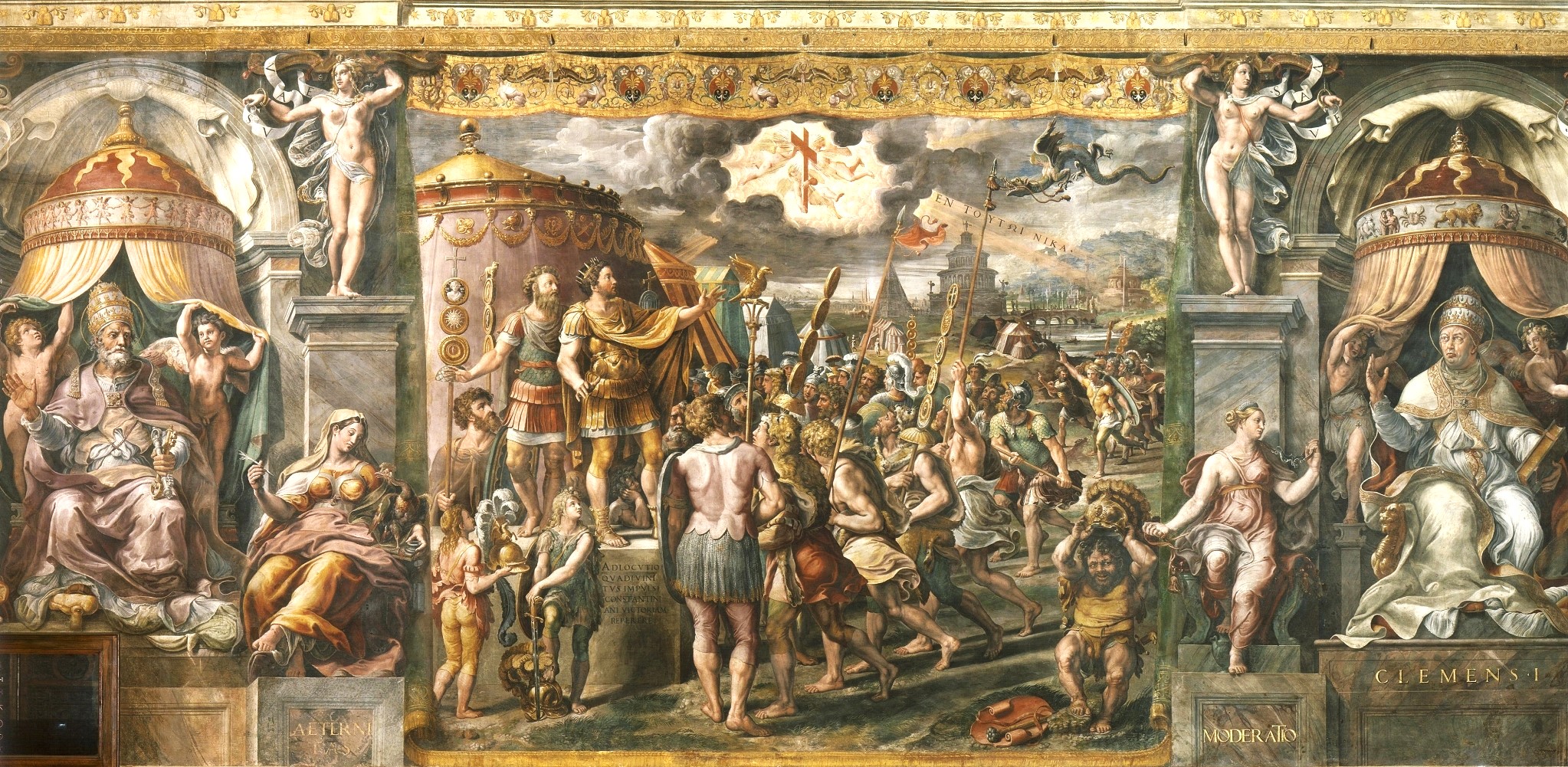
The Hall of Constantine, the largest of Raphael's rooms, returns to shine.

The 10-year-long complete restoration presented at the Vatican Museums.

Vison of the cross

A masterpiece of Renaissance painting preserved in the Vatican Museums returns to its splendor after a ten-year restoration: the Hall of Constantine, the largest of the Raphael Rooms, which was named in honor of the Roman emperor who granted freedom of worship to Christians.
On the occasion of the Jubilee Year, the Vatican Museums present the completion of the complete restoration of the Hall, begun in March 2015 on the east wall, which dominates the scene with the Vision of the Cross, and concluded in December 2024.
The restoration has restored full legibility to all the decorative components: "the full recovery of the iconography of the Hall of Constantine, from the walls to the vault," explained by Fabrizio Biferali, "now allows us to better visualize the historical passages that characterized the Church of Rome in the sixteenth century: from the first decades, dominated by the two glorious Medici papacies of Leo X and Clement VII, to the central decades of Paul III Farnese and Paul IV Carafa, marked by the innovations of the Council of Trent and the reform of the curia, up to the end of the century with the counter-reformation papacies of Gregory XIII Boncompagni and Sixtus V Peretti, during which the decoration was completed."
Master restorer Fabio Piacentini emphasized how the cleaning brought the original colors back to light and allowed a new understanding of the executive phases and the technical stratification of the work. "The restoration was like lifting a centuries-old veil: behind the patina of time, every detail found light, depth and meaning. Raphael, his workshop, Laureti: all in visual dialogue again, after centuries of silence," he explained.
The contribution of the Scientific Research Cabinet, directed by Fabio Morresi, was crucial, having conducted a complex diagnostic campaign with cutting-edge technologies: 1900 nanometer reflectography, false-color infrared, UV fluorescence and chemical analysis. The entire cycle was also documented with a three-dimensional model based on laser scans, today a point of reference for the integrated analysis of large decorative apparatuses.

"The technologies have allowed us to penetrate the layers of time and give voice to the pictorial matter, also highlighting significant executive differences that tell the complexity of the Renaissance construction site" observed Morresi.

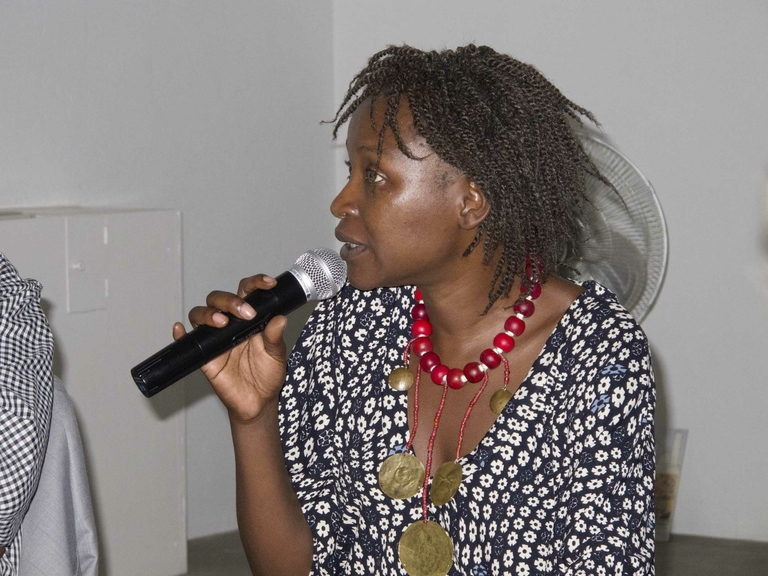
Koyo Kouoh, Who Was Curating the 2026 Venice Biennale, Has Died

The passing of Koyo Kouoh

null
Photo by By Lard Buurman. - SUD-Salon Urbain de Douala 2010.

La Biennale di Venezia is deeply saddened and dismayed to learn of the sudden and untimely passing of Koyo Kouoh, Curator of the 61st International Art Exhibition, scheduled to open on 9 May 2026.

Appointed in December 2024 by the Board of Directors of La Biennale, Koyo Kouoh worked with passion, intellectual rigor and vision on the conception and development of the Biennale Arte 2026. The presentation of the Exhibition’s title and theme was due to take place in Venice on 20 May.

Her passing leaves an immense void in the world of contemporary art and in the international community of artists, curators, and scholars who had the privilege of knowing and admiring her extraordinary human and intellectual commitment.

FAKE ART IS A CRIME

An alliance of Cultural and heritage police forces around the world have started to make significant inroads into the crackdown in Art Forgeries. In Italy a workshop outside Rome containing 71 fake paintings falsely attributed to famous artists including Rembrandt van Rijn, Pablo Picasso, and Andy Warhol has been raided by Italy’s art crime squad and all work confiscated with arrests. The operation was uncovered by the Carabinieri Command for the Protection of Cultural Heritage police squad, which oversees art and antiquities crimes in Italy. a local art restorer’s property on the outskirts of Rome, the paintings, in various states of completion, were seized,; hundreds of painting materials, art catalogues, forged certificates of authenticity and stamps from now-defunct art galleries and collections, and evidence of falsified artist signatures.
The FBI reported that The United States Attorney’s Office for the Middle District of Pennsylvania announced that Thomas Trotta, age 49, of Dunmore, Pennsylvania, was sentenced on March 13, 2025, to 96 months’ imprisonment, to be followed by a term of supervised release, and to pay restitution in the amount of $2,759,073, by U.S. District Judge Malachy E. Mannion for one count of theft of major artwork.
Trotta had previously pleaded guilty to one count of theft of major artwork, and admitted to stealing the following:
• “Le Grande Passion” by Andy Warhol and “Springs Winter” by Jackson Pollock stolen in 2005 from the Everhart Museum in Scranton, Pennsylvania;
• Nine (9) World Series rings, seven (7) other championship rings, and two (2) MVP plaques all belonging to Yogi Berra, worth over $500,000 stolen in 2014 from the Yogi Berra Museum & Learning Center in Little Falls, New Jersey;
• Six (6) championship belts, including four belonging to Carmen Basilio and two belonging to Tony Zale stolen in 2015 from the International Boxing Hall of Fame in Canastota, New York;
• The Hickok Belt and MVP Trophy belonging to Roger Maris, stolen in 2016 from the Roger Maris Museum in Fargo, North Dakota;
• The U.S. Amateur Trophy and a Hickok Belt awarded to Ben Hogan, stolen in 2012 from the USGA Golf Museum & Library;
• Fourteen (14) trophies and other awards worth approximately $300,000 stolen in 2012 from the Harness Racing Museum & Hall of Fame in Goshen, New York;
• Five (5) trophies worth over $30,000, including the 1903 Belmont Stakes Trophy, stolen in 2013 from the National Racing Museum & Hall of Fame in Saratoga Springs, New York;
• Three antique firearms stolen in 2006 from Space Farms: Zoo & Museum in Wantage, New Jersey;
• A 1903/1904 Tiffany Lamp stolen in 2010 from the Lackawanna Historical Society in Scranton, Pennsylvania,
• “Upper Hudson” by Jasper Crospey, worth approximately $120,000, stolen in 2011 from Ringwood Manor in Ringwood, New Jersey;
• Antique firearms worth over $150,000, stolen in 2011 from Ringwood Manor in Ringwood, New Jersey;
• Hundreds of thousands of dollars’ worth of gold nuggets stolen in 2011 from the Sterling Hill Mining Museum in Ogdensburg, New Jersey;
• An antique shotgun worth over $30,000 stolen in 2018 from Space Farms: Zoo & Museum in Wantage, New Jersey;

In Canada: A Canadian court on September 5 sentenced David Voss, who is believed to have overseen the forgery of thousands of artworks falsely attributed to renowned Anishinaabe artist Norval Morrisseau, to five years in prison, the Canadian Broadcasting Corporation reports. Voss on June 4 pleaded guilty to forgery and to disseminating forged documents in connection with a fraud ring operating out of Thunder Bay, Ontario, between 1996 and 2019.
The convicted fraudster was one of eight people arrested in March 2023 on suspicion of forging and selling the work of Morrisseau, known as “the Picasso of the North,” in a scheme that predated the artist’s 2007 death by at least a decade. Done in the Woodlands School of Art style founded by Morrisseau, the works in some instances commanded up to tens of thousands of dollars. According to an agreed statement of facts read in court in June, Voss devised a “paint-by-numbers” assembly-line process in which he outlined in pencil the works’ contents and then assigned areas letter codes indicating the color of paint to be applied by those farther down the “line,” whose ranks were said to include children forced into sweatshop labor as well as young Indigenous artists pressed into service by the accused.
In Portugal: An alleged art forger, who kept his work strictly national – but has reportedly “caused damage to his victims totalling hundreds of thousands of euros” – has been arrested by police in Lisbon.
The 56-year-old is cited for “forging and selling paintings by renowned artists” like Paula Rego, and Manuel Cargaleiro (both recently deceased).
His modus operandi appears to be that he “posed as a doctor to gain the trust and credibility of potential clients”.
Investigating “Operation Fresh Paint”, PJ police “located a commercial space in Lisbon that the suspect used as an studio, where more than two dozen paintings and sketches bearing the signatures of renowned artists such as Paula Rego, Júlio Resende, Malangatana, Cargaleiro, Cesariny, Cruzeiro Seixas and Cutileiro were found and seized”.
An Australian investigation is now ongoing in reference to Gallery operations, resales and false pretences in the art world.
Whilst in Italy and London investigations are taking part in the pretences of fake artbooks publishing, fake memberships to the Biennales and much more.
Categories: Art

Christie’s to present three rare works by Paul Delvaux as highlights of The Art of the Surreal Evening Sale in March 2025

Christie’s is honored to present three exceptional paintings by renowned Belgian artist Paul Delvaux (1897–1994) as key highlights of The Art of the Surreal Evening Sale on 5 March 2025, part of the 20th/21st Century London Marquee Week. These remarkable works, all coming to market for the first time in over 30 years, originate from a distinguished private collection and capture pivotal moments in Delvaux’s career, standing as a testament to his enduring legacy within the Surrealist movement.

The three masterpieces – Les belles de nuit (1936; estimate: £500,000 - £1,000,000), La ville endormie (1938; estimate: £1,200,000 - £1,800,000), and Nuit de Noël (1956; estimate: £1,000,000 - £2,000,000) - epitomise Delvaux’s signature blend of lyricism and melancholia. Known for interweaving reality and fantasy, Delvaux’s style encapsulates the aesthetic principles of Surrealism while maintaining his independence from any formal artistic circle.

Les belles de nuit (1936; oil on canvas, 39⅜ x 39⅜ in.) has a distinguished provenance, having been owned by Edward James, the celebrated patron of Surrealism who famously supported artists such as Salvador Dalí and René Magritte. James displayed the painting at Monkton House in West Sussex, where its neoclassical architecture echoed the work’s surreal blend of antiquity and modernity. Les belles de nuit hung on the first floor landing, in an arched architectural structure which mimicked the architecture of the neoclassical building in the painting. Set against a rugged backdrop inspired by Belgium’s so called “Pays Noir” (black country), painted here for the first time in Delvaux’s oeuvre, the composition features two nudes adorned with elaborate headdresses. Classical influences shine through in the sculptural forms and elegant poses of the figures, while the architectural framing and elements echo the lasting influence of Giorgio de Chirico on Delvaux.

La ville endormie (1938; oil on canvas, 59⅜ x 69⅛ in), from Delvaux’s celebrated series of cityscapes, is a haunting vision of nude and semi-clothed female figures, bathed in soft moonlight amidst the ruins of a dreamlike city featuring implausibly juxtaposed architectural styles. The artist’s masterful use of perspective creates a theatrical atmosphere, where crumbling buildings and towering mountains evoke a timeless, almost otherworldly backdrop. The artist’s own likeness appears in a shadowy doorway, inviting the viewer into this enigmatic world. Influenced by his classical studies and the neoclassical architecture he admired, Delvaux also draws on the metaphysical works of Giorgio de Chirico and Surrealist aesthetics. The painting blends history and imagination, offering a poignant reflection on the fragility of the past.

Nuit de Noël (1956; oil on masonite, 49¾ x 69½ in.) presents a serene and dreamlike scene of a young girl at an urban train station, bathed in the silvery glow of a full moon. Painted while Delvaux was a professor at the École Nationale Supérieure d’Art et d’Architecture in Brussels, this large composition showcases his talent for crafting monumental, dreamy visions. The moonlit station is rendered with precise realism and cinematic clarity: the interplay of light, from the moon’s glow to electric station lamps, creates a surreal harmony that blurs the boundaries of night and day, a hallmark of Delvaux’s work and the Surrealist ethos. A lifelong fascination with trains, inspired by childhood dreams of becoming a stationmaster, adds a poignant autobiographical layer.

Olivier Camu, Deputy Chairman, Impressionist and Modern Art, Christie’s, London: “These iconic works by Paul Delvaux from a distinguished private collection, all coming to market for the first time in over thirty years, capture pivotal moments in the artist’s career. They are from the best years of his oeuvre and stand as a testament to his enduring legacy within the Surrealist movement. Notably, Les belles de nuit boasts an important provenance, having once been owned by the legendary Surrealist patron Edward James, who hung it in the renowned Monkton House. This collection beautifully traces the evolution of Delvaux’s artistic journey and celebrates his legacy within the surrealist movement. We are thrilled to present it in our upcoming The Art of the Surreal Evening Sale on 5 March”.

The Art of the Surreal Evening Sale, part of the 20th/21st Century Art London Marquee Week, is the only major international auction solely dedicated to Surrealism, its forebears, and influences in London. Christie’s has held this sale since 1989, longer and more consistently than any other auction house, achieving record-breaking prices through it.


Christie’s is proud to present an exciting calendar of 20th/21st Century Art Marquee Auctions in London in March 2025:

5 March - 20th/21st Century: London Evening Sale and The Art of the Surreal Evening Sale

6 March – Post-War and Contemporary Art Day Sale

7 March - Impressionist and Modern Art Day and Works on Paper Sale

26 February - 12 March – Post-War and Contemporary Art Online
Categories: Art

The ability to value the importance of women in society will define The Intelligent Age.

Social Pioneering can help us explore the intricacies of the 'Intelligent Age' with empathy, creative minds, and a profound comprehension of being human.
The World Economic Forum 2024’s Global Gender Report uncovers that, conducting this balance will require an expected 134 years - highlighting the well-established nature of orientation disparity.
This imbalance is imbued in social standards, customs, and cultural mentalities that characterize orientation jobs and power elements. While strategy changes are fundamental, social change is similarly as critical in moving convictions and ways of behaving. The social area, traversing arts, media, diversion, and instruction could lead this change.
Through media, writing, music, and art, the social area shapes public insight, either building up or testing generalizations. By supporting different portrayals of orientation and nationality, it cultivates a more comprehensive understanding of orientation and motivates people to address conventional jobs, making the way for added even-handed conceivable outcomes.
The social area can additionally advance consideration by enhancing underestimated voices, including women of colour, LGBTQ+ individuals, and those from different financial backgrounds, who are often underrepresented or distorted in traditional press. This enhances how we might interpret human encounters as well as features how race, class, and different characters converge to worsen orientation imbalance.
Moreover, social media should address imbalance inside its own designs, guaranteeing equivalent portrayal and open doors for women and non-double people in positions of authority and in the background. By displaying value and incorporation, it can set a strong model for different areas to follow.
With its critical potential to shape the future, the social area can challenge generalizations, intensify different stories, and promote for orientation balance. The inquiry currently is: how might we tackle this possibility to drive genuine change and close the orientation hole for a long time into the future?
The social area is a strong motor for change. It shapes accounts, challenges generalizations, and flashes developments. Art can be a mirror to society, reflecting the two, its imperfections and its true capacity. To lessen the orientation hole, the social area should initially embrace different voices at each level. Women - and particularly women of colour - should not exclusively be in front of an audience yet in addition be in places of administration: coordinating exhibitions, delivering films, arranging presentations, and making strategy. At the point when women lead, they bring one-of-a-kind viewpoints that can rouse foundational change. Art has the extraordinary ability to challenge predispositions unobtrusively yet significantly.
Supporting women across the arts is not a luxury; it is essential. The World Economic Forum’s Global Gender Gap report says it will take 135 years to close the gender gap, but culture moves faster. Our ability to value the importance of women in society will define The Intelligent Age. There is no doubt that when women thrive, the world thrives.
Categories: Art

The International Order Is Failing to Protect Palestinian Cultural Heritage

International agreements enshrine the protection of cultural heritage and recognize its destruction as a war crime. But agencies responsible for policing these agreements have been conspicuously and inexcusably absent from the current conflict.
No doubt protecting historical monuments and archaeological sites is challenging amid a war, and humanitarian efforts should prioritize saving lives. Yet UNESCO and other heritage organizations have tools and tactics to deter the destruction of cultural assets in conflict zones.
Why, then, are these organizations neglecting to protect cultural heritage in Palestine?
Political conflicts and wars ravage societies. While most attention focuses on lost human lives—and rightly so—the destruction of cultural assets is also disastrous.
Cultural heritage includes archaeological sites, historic monuments, artifacts, archives, and museums, all of which hold value for the realms of history, science, aesthetics, religion, and architecture. These elements serve as symbols of collective identity and tangible links to past peoples. Be it an archaeological site, a work of literature, a painting—every cultural asset conveys a narrative of human ingenuity and adaptability.
International bodies have worked to protect cultural property through numerous conventions and protocols. In 2017, for example, the United Nations Security Council adopted Resolution 2347, which condemns the unlawful destruction, looting, and smuggling of cultural heritage by terrorist groups.
According to Resolution 242, passed by the United Nations Security Council in 1967, the Palestinian territories, which include the West Bank, East Jerusalem, and the Gaza Strip, are under occupation. As the occupying power, Israel must take necessary measures to safeguard and protect the cultural and natural heritage of the Palestinian territories.
During its 2023–2024 assault on Gaza, Israel has been credibly accused of doing the opposite: systematically destroying Gaza’s cultural heritage.
As of February, Israeli forces have destroyed at least 200 archaeological sites and buildings of cultural and historical significance in the Gaza Strip, according to a report from the Palestinian Ministry of Culture.
Destroying Architectural heritage and cultural site is a crime, as we have never seen a building or artwork kill anyone!
Categories: Art

A Dozen Artists Accuse Thierry Goldberg Gallery of NYC of Non-Payment

A Dozen Artists Accuse Thierry Goldberg Gallery of NYC Gallery of Non-Payment.
The gallery has shuttered, and taken down its website.
Since August, a dozen artists have banded together to make sense of misconduct by Lower East Side-based Thierry Goldberg Gallery, which has debuted top talents like Naudline Pierre, Tschabalala Self, and Louis Fratino since opening in 2007. The aggrieved artists allege that director Ron Segev violated their consignment agreements by withholding tens of thousands of dollars in payments, plus dozens of artworks.
This was initially reported by Vittoria Benzine- Artnet news
Categories: Art